How do you find distressed property records in Baltimore, Maryland?
Baltimore publishes five free lead lists: environmental citations, tax lien certificate sale properties, the tax sale roll, and vacant building notices on data.baltimorecity.gov (Open Baltimore), plus an open property notices layer on services1.arcgis.com. All are downloadable or queryable in your browser.
How do I pull environmental citations records step by step?
Open Baltimore, the city's official open data portal, publishes citations issued for sanitation, health, safety, and other quality-of-life code violations — and owners racking up unpaid environmental citations are often tired landlords or absentee owners ready to sell.
Go to Open Baltimore
Navigate to data.baltimorecity.gov. This is the City of Baltimore's official open data portal.
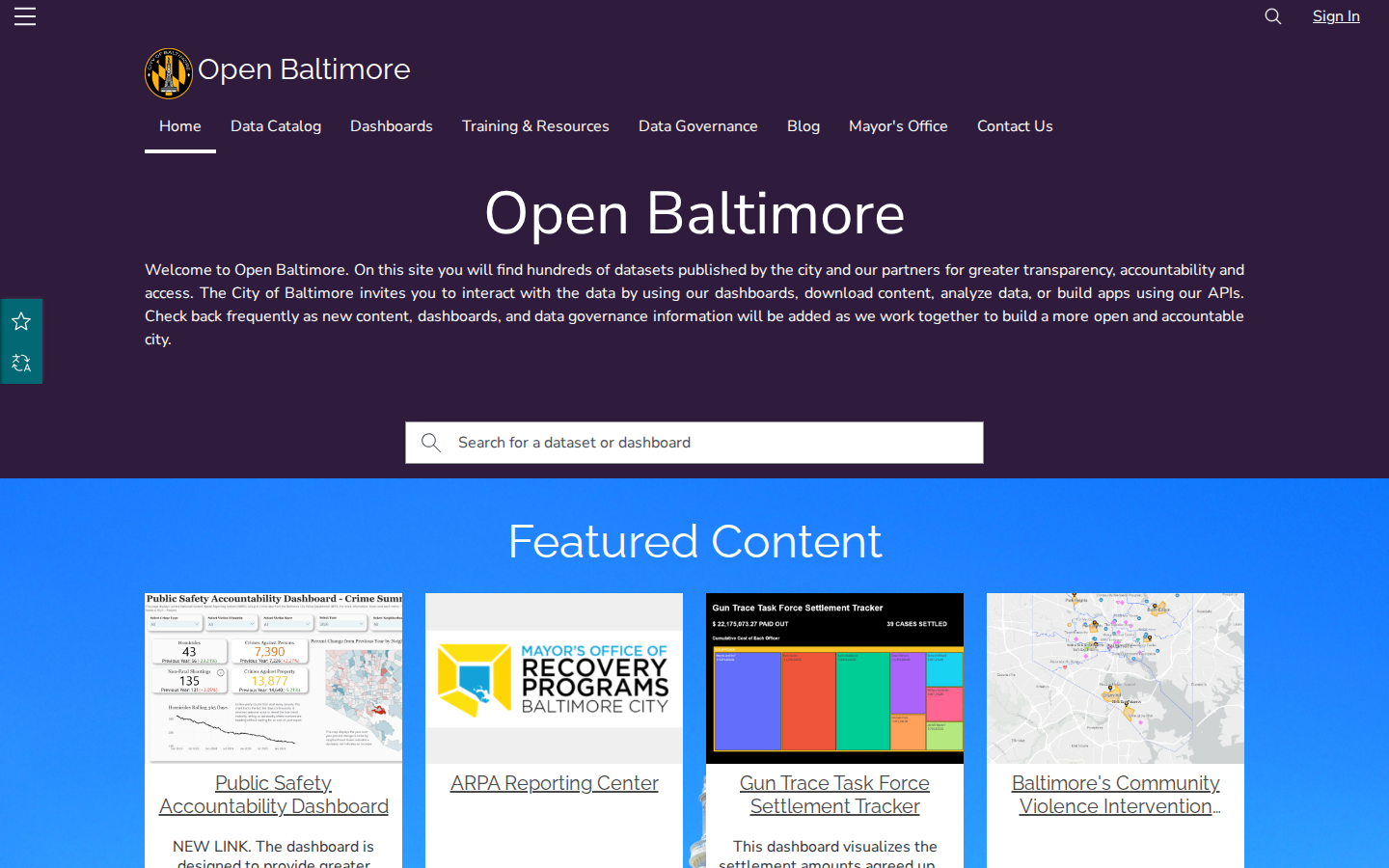
Find the Environmental Citations dataset
Use the search bar (or the Data Catalog menu) and search for Environmental Citations. Open the dataset named Environmental Citations — citations issued for sanitation, health, safety, and other quality-of-life code violations, updated daily.
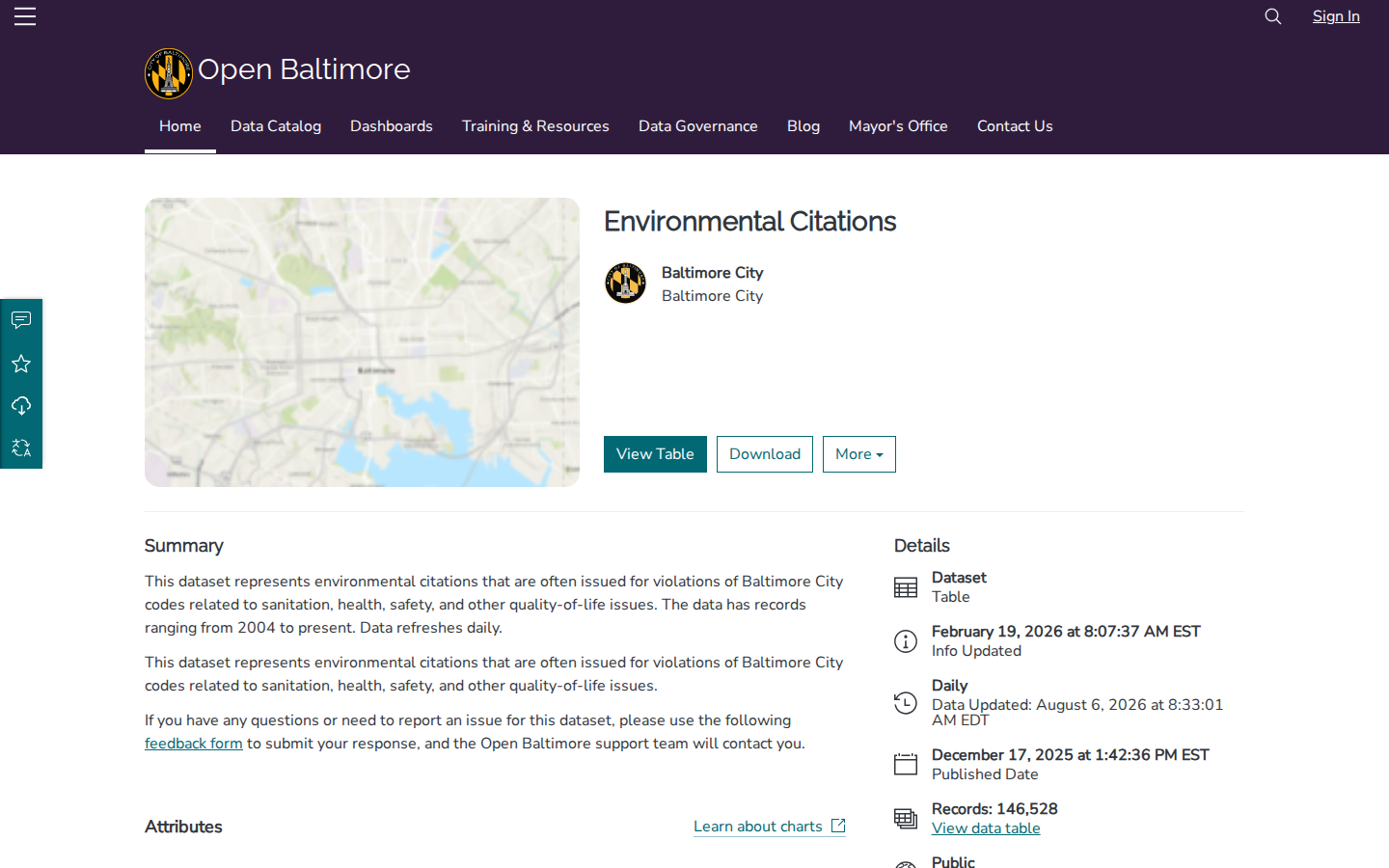
Open the data table
On the dataset page click View data table. The table shows one citation per row with columns like CitationNo, ViolationDate, Agency, FineAmount, and Description.
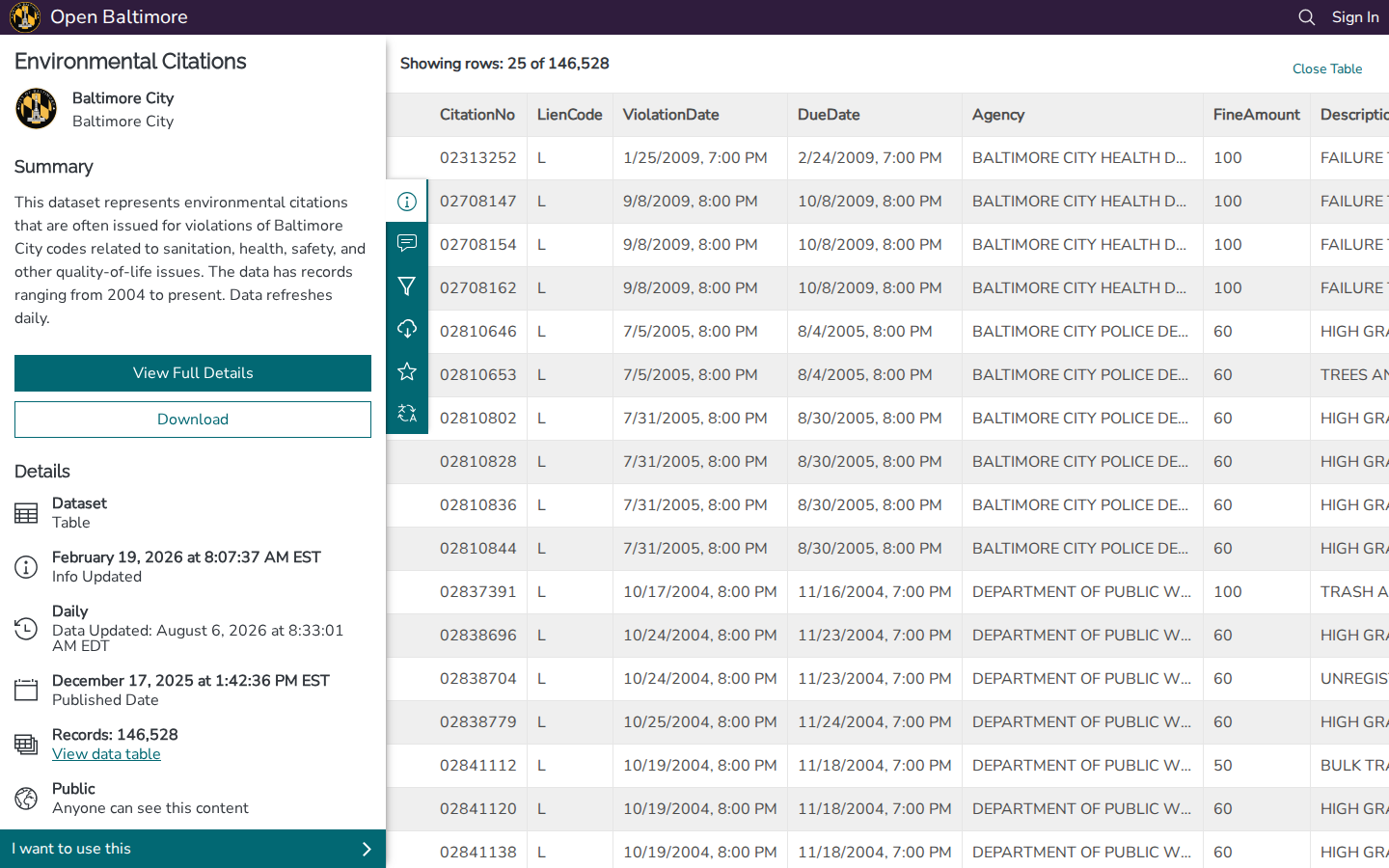
Filter and sort for fresh leads
Click the Filter icon on the left edge of the table to narrow the list — for example filter Balance to greater than 0 for citations still unpaid, or CitationStatus to open ones. Then sort the ViolationDate column descending so the newest citations are on top.
Download the list
Back on the dataset page, click Download and choose CSV to pull the whole list into a spreadsheet.
Record the data
For each citation, note the citation number, the violation description, the property location (address), the block and lot (Baltimore's parcel ID), the fine amount and balance due, the violation date, and the neighborhood. Owners racking up unpaid environmental citations are often tired landlords or absentee owners ready to sell.
How do I pull open property notices records step by step?
Baltimore's housing department publishes a live list of open code violation notices, and an open notice means the owner is under a city order to fix the property — a classic motivated-seller trigger.
Open Baltimore's open housing notices layer
Navigate to Baltimore City's Open Notices data page. This is the housing department's live list of open code violation notices, published by the same city GIS team behind Open Baltimore but not listed in the portal catalog, so you open the layer page directly.
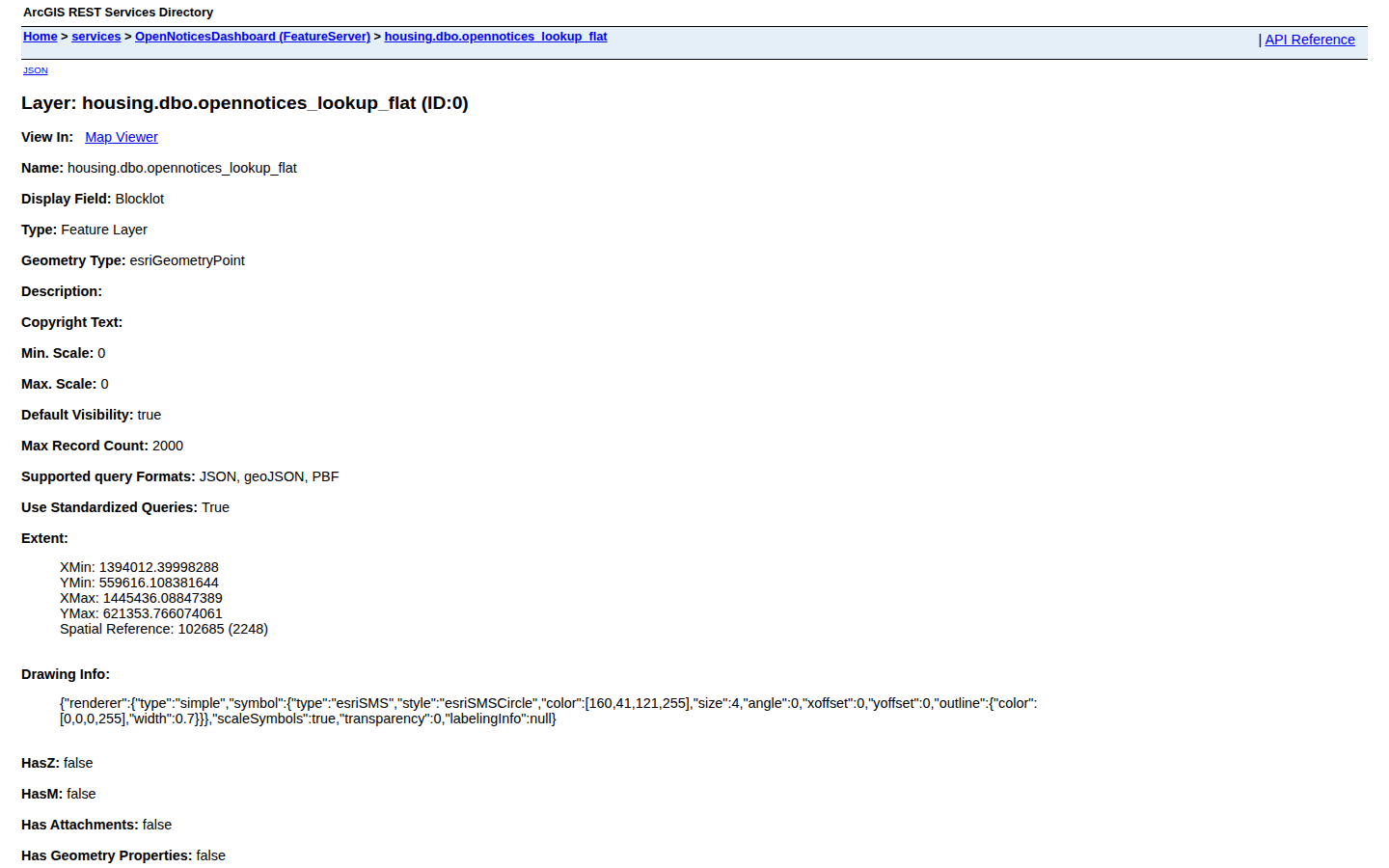
Open the Query page
Scroll to the bottom of the layer page and click the Query link. This opens a form that lets you pull the notice records right in your browser.
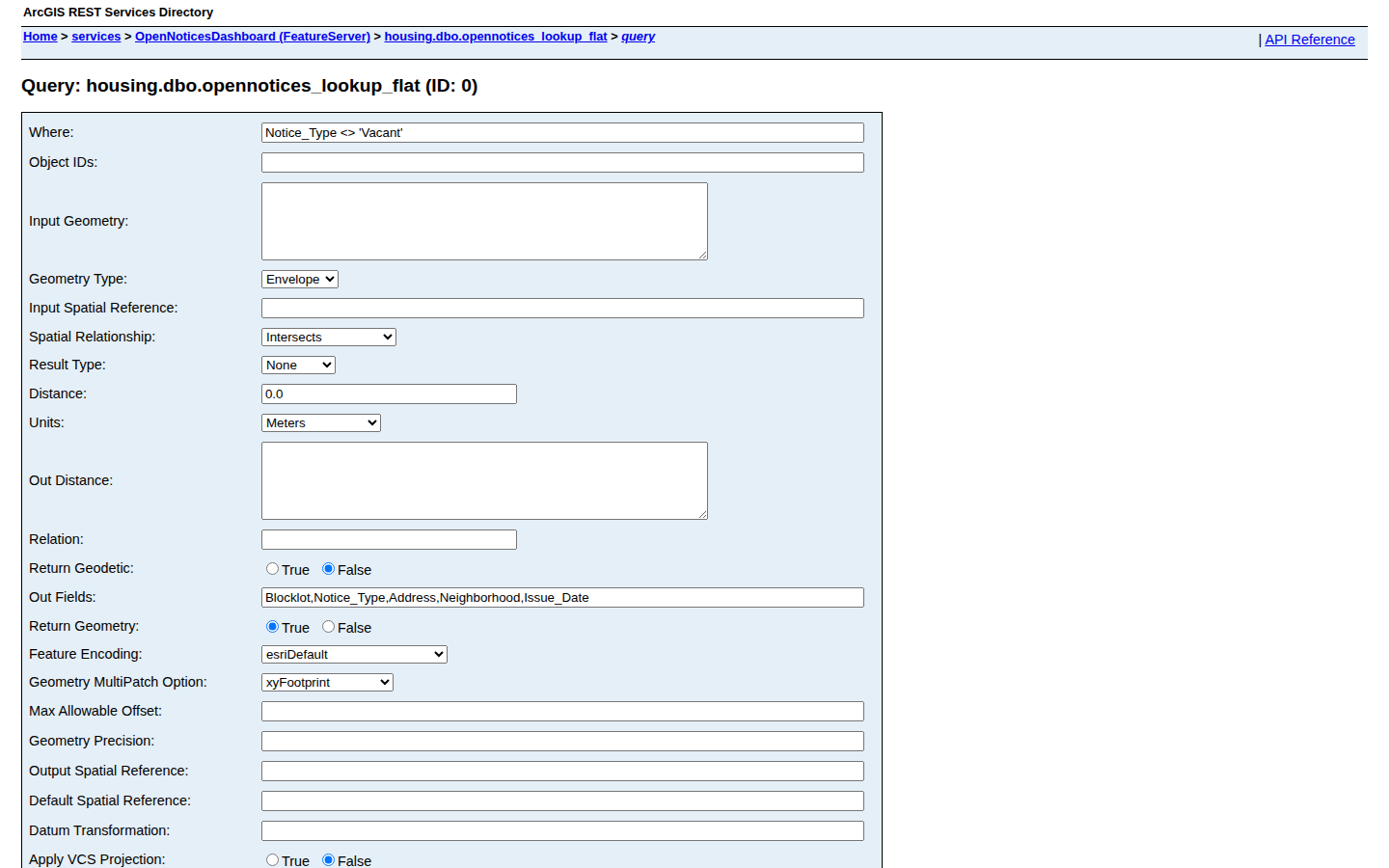
Filter out vacant-building notices
In the Where box type Notice_Type <> 'Vacant'. This keeps every open notice type except the vacant-building notices, which Baltimore publishes as their own separate list. In the Out Fields box enter Blocklot,Notice_Type,Address,Neighborhood,Issue_Date.
Sort newest notices first
In the Order By Fields box type Issue_Date DESC so the most recently issued notices come back first, set Format to HTML, then click Query (GET). The notices appear below the form.
Record the data
For each notice, note the block and lot (Baltimore's parcel ID), the notice type (the kind of violation), the property address, the neighborhood, and the issue date. An open violation notice means the owner is under a city order to fix the property — a classic motivated-seller trigger.
How do I pull tax lien sale records step by step?
Open Baltimore publishes the properties whose unpaid city liens are offered at Baltimore's annual tax lien certificate sale — owners on this list are behind on city bills, so reach out before the lien sale forces their hand.
Go to Open Baltimore
Navigate to data.baltimorecity.gov. This is the City of Baltimore's official open data portal.
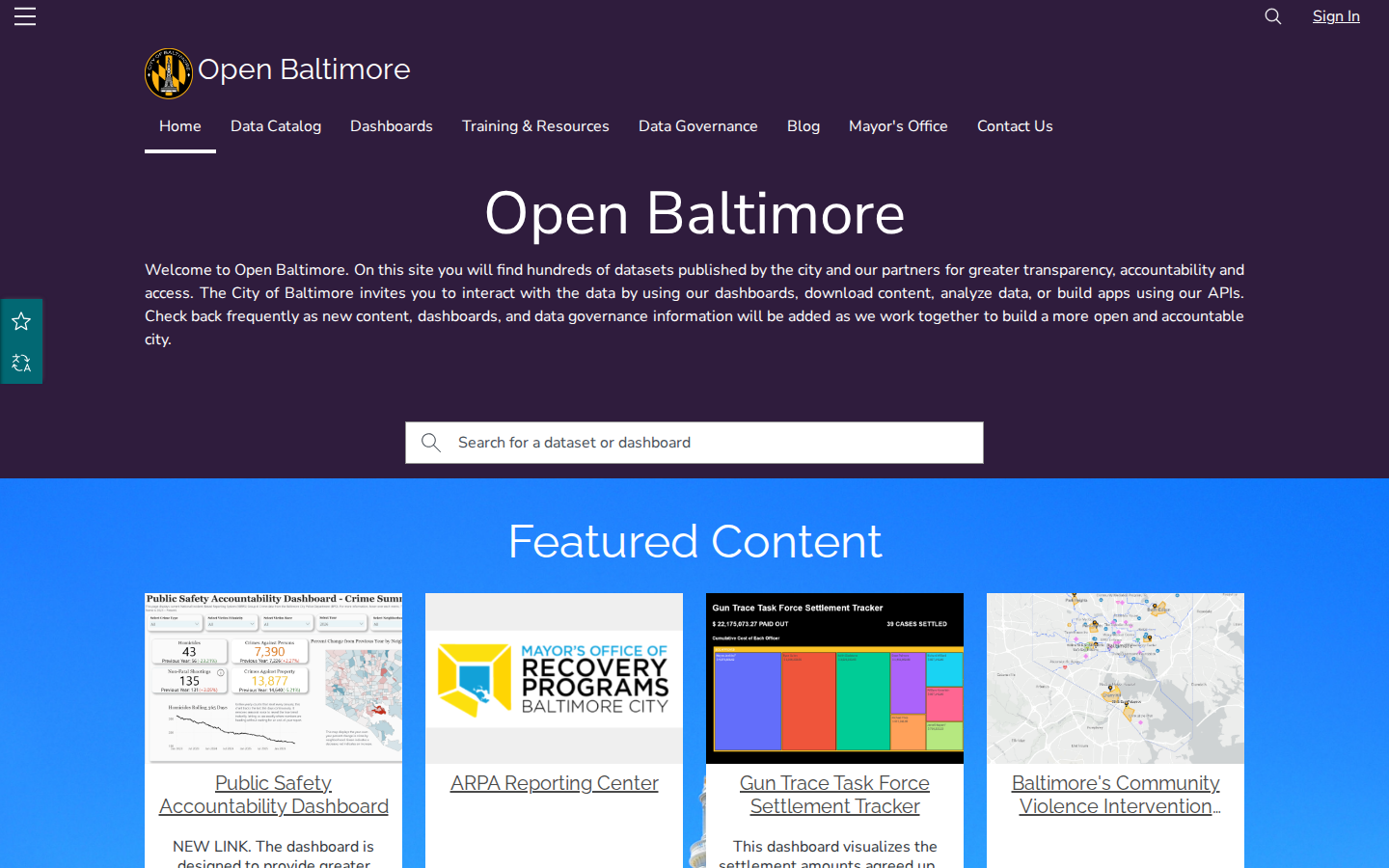
Find the tax lien sale dataset
Use the search bar and search for tax lien. Open the dataset named Tax Lien Certificate Sale Properties — the properties whose unpaid city liens are offered at Baltimore's annual tax lien certificate sale.
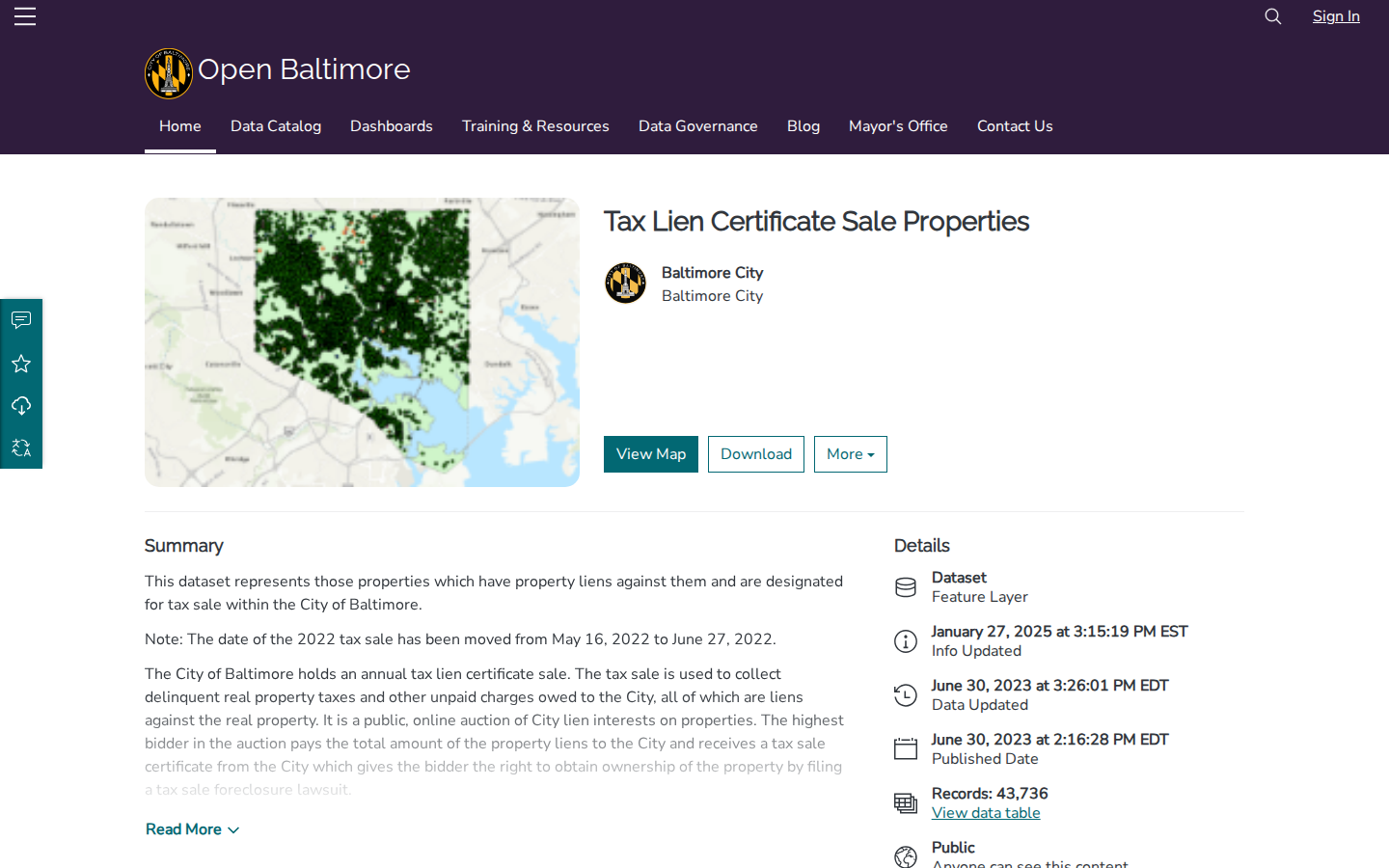
Open the data table
On the dataset page click View data table. Each row is one property headed to (or through) the lien sale, with the owner and address in columns.
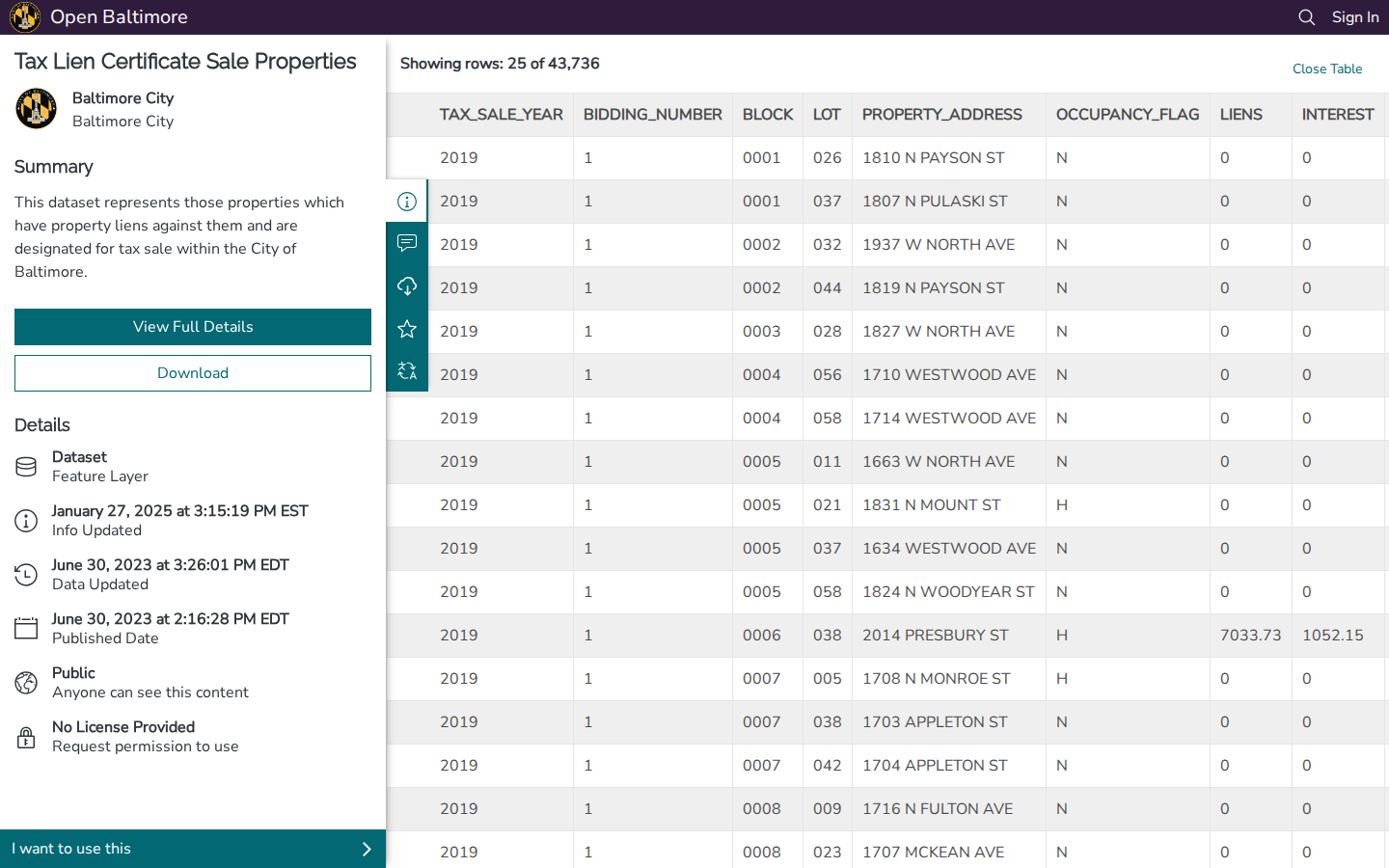
Sort to the latest sale year
Sort the TAX_SALE_YEAR column descending so the most recent sale list is on top. You can also use the Filter icon to show only rows where the REDEMPTION_DATE column is empty — owners who have not yet redeemed are still in distress.
Download the list
Click Download on the dataset page and choose CSV to pull the full list into a spreadsheet.
Record the data
For each property, note the owner name, the property address, the block (parcel), the bidding number, the land use code (property type), the redemption date if any, and the tax sale year. Owners on this list are behind on city bills — reach out before the lien sale forces their hand.
How do I pull tax sale records step by step?
Open Baltimore's tax sale roll lists tax-delinquent properties — including ones exempted from the sale — and owners on this roll owe back taxes, making them prime motivated-seller leads.
Go to Open Baltimore
Navigate to data.baltimorecity.gov. This is the City of Baltimore's official open data portal.
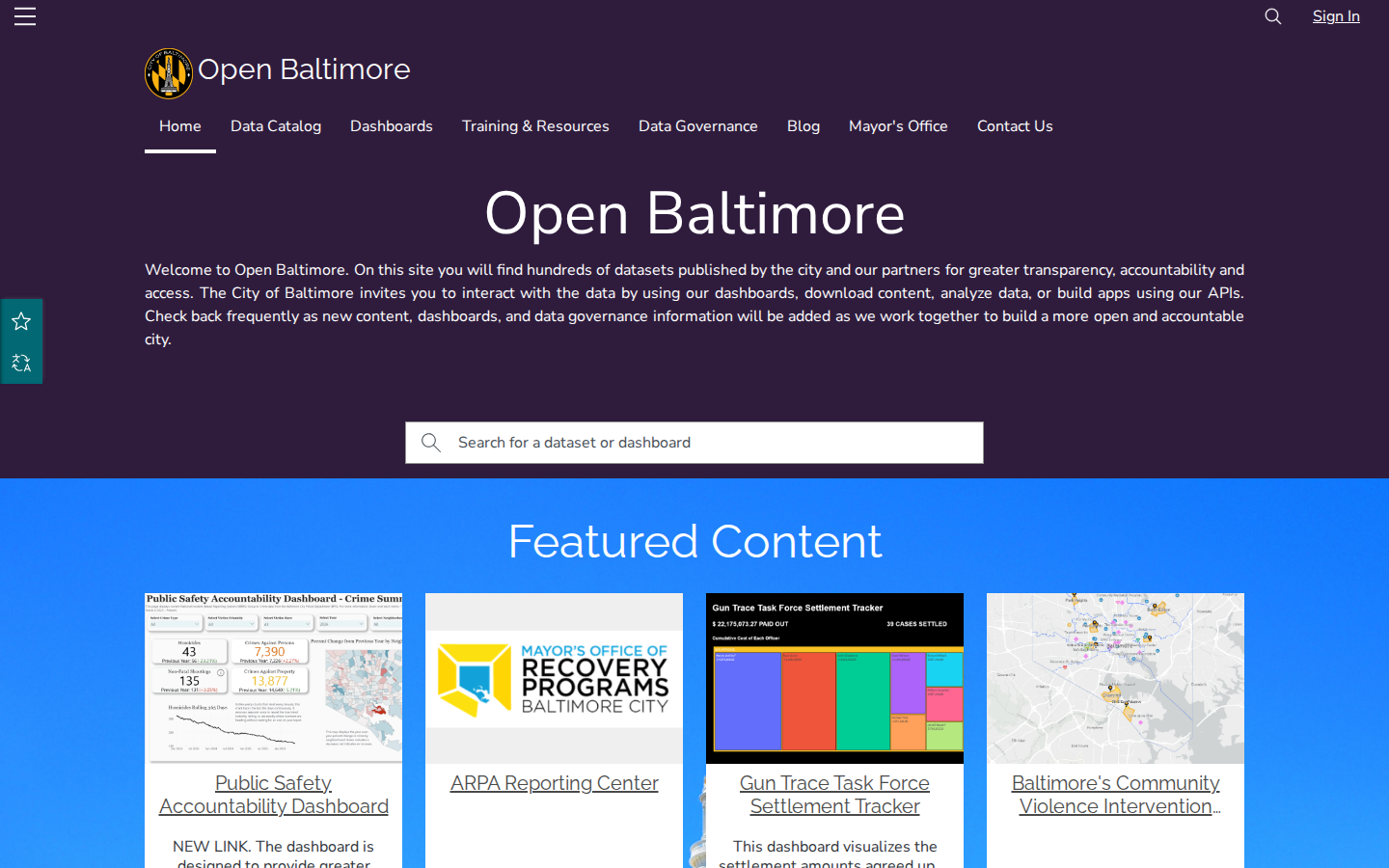
Find the tax sale list
Use the search bar and search for tax sale. Open the dataset named 2021 Tax Sale List (With Exempted Properties) — Baltimore's tax sale roll, including properties that were exempted from the sale.
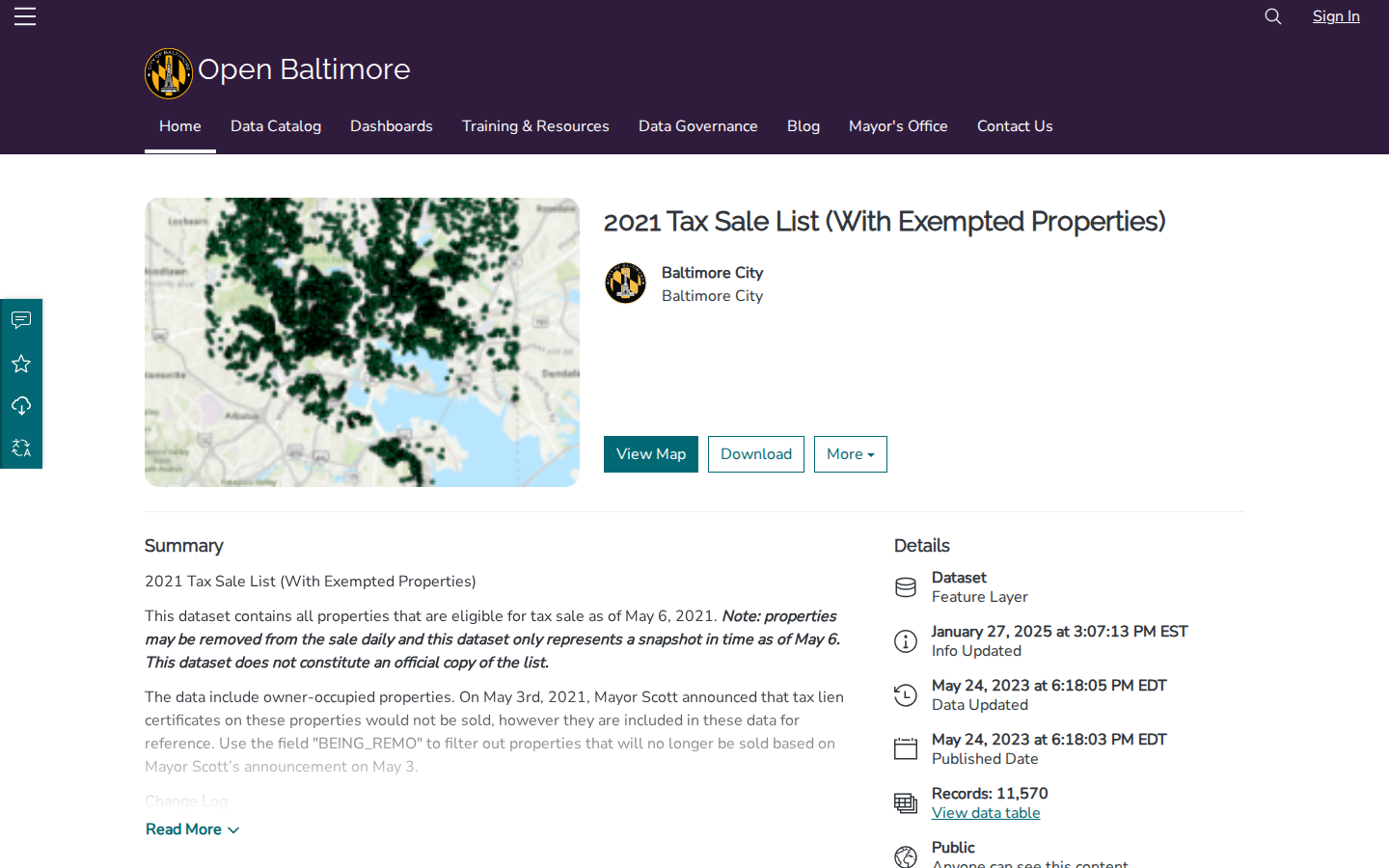
Open the data table
On the dataset page click View data table. Each row is one tax-delinquent property with the owner name and address in columns.
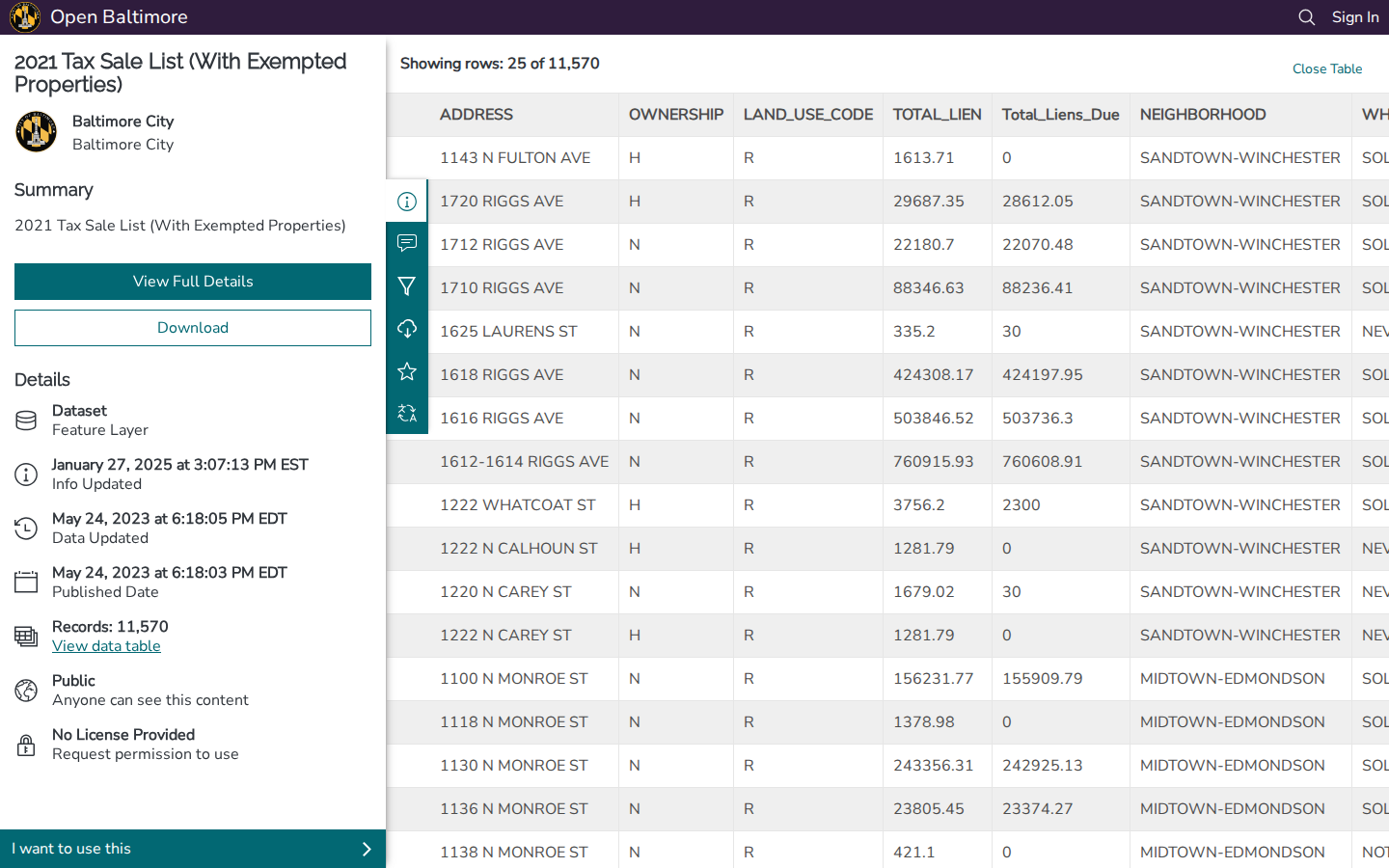
Sort and filter the list
Sort the deed_date column descending so the most recent deed activity is on top. Use the Filter icon to narrow by the when_sold column if you only want properties at a particular stage of the sale, or by land_use_c to focus on residential parcels.
Download the list
Click Download on the dataset page and choose CSV to pull the whole roll into a spreadsheet.
Record the data
For each property, note the owner name, the property address, the PIN (parcel number), the land use code (property type), the sale status (when sold), and the deed date. Cross-check the newest entries against the city's current-year sale notices — owners on this roll owe back taxes and are prime motivated-seller leads.
How do I pull vacant buildings records step by step?
Open Baltimore lists every vacant building notice the city has issued, and active notices with long-standing dates are your strongest vacant-property leads.
Go to Open Baltimore
Navigate to data.baltimorecity.gov. This is the City of Baltimore's official open data portal.
Open the Vacant Building Notices dataset
Use the search bar and type Vacant Building Notices, then open the dataset with that exact name. It lists every vacant building notice the city has issued and is refreshed daily.
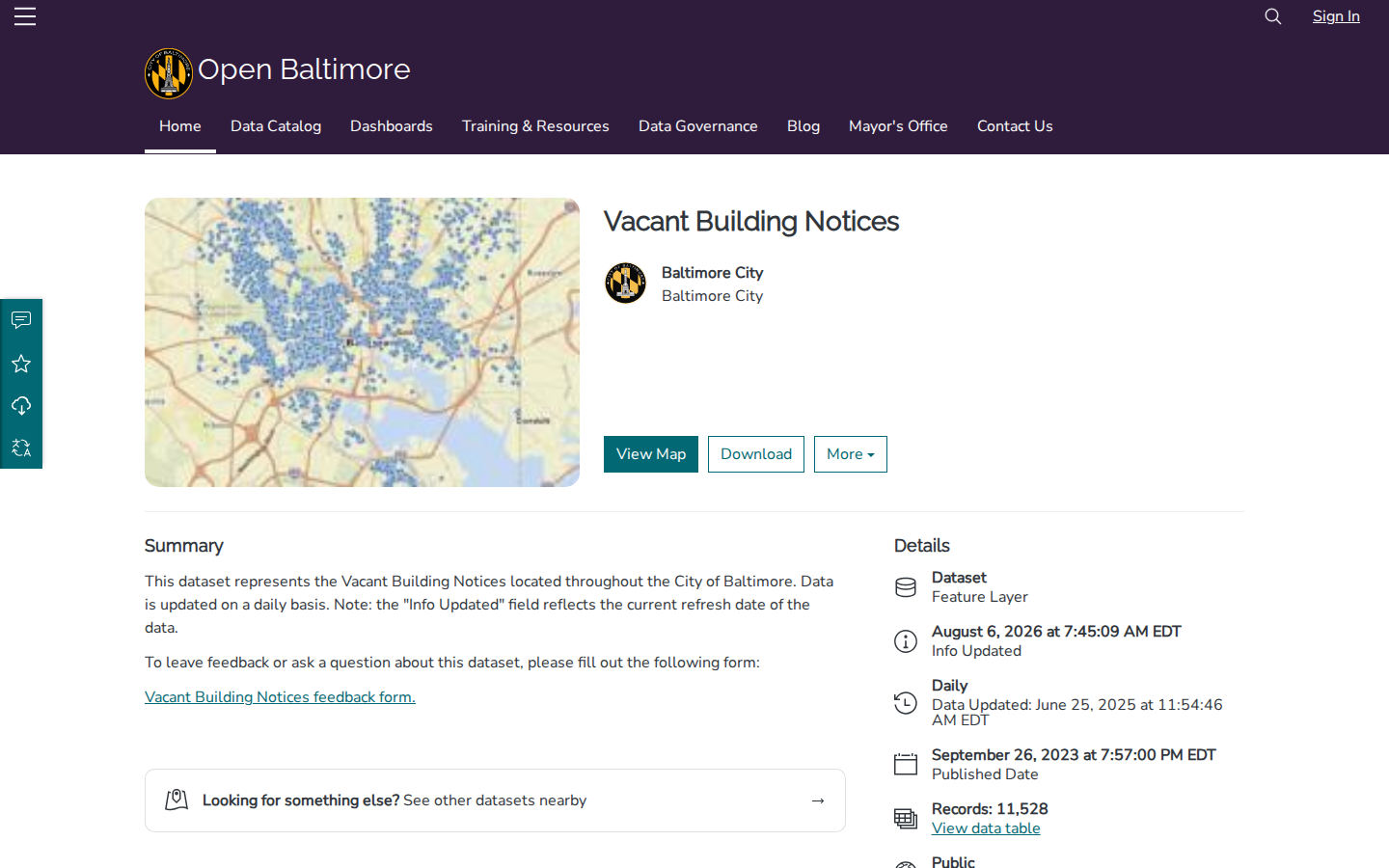
View the data table
Click View Full Details, then choose Explore and switch on the Table view (or open the dataset's Data tab). Each row is one vacant building notice.
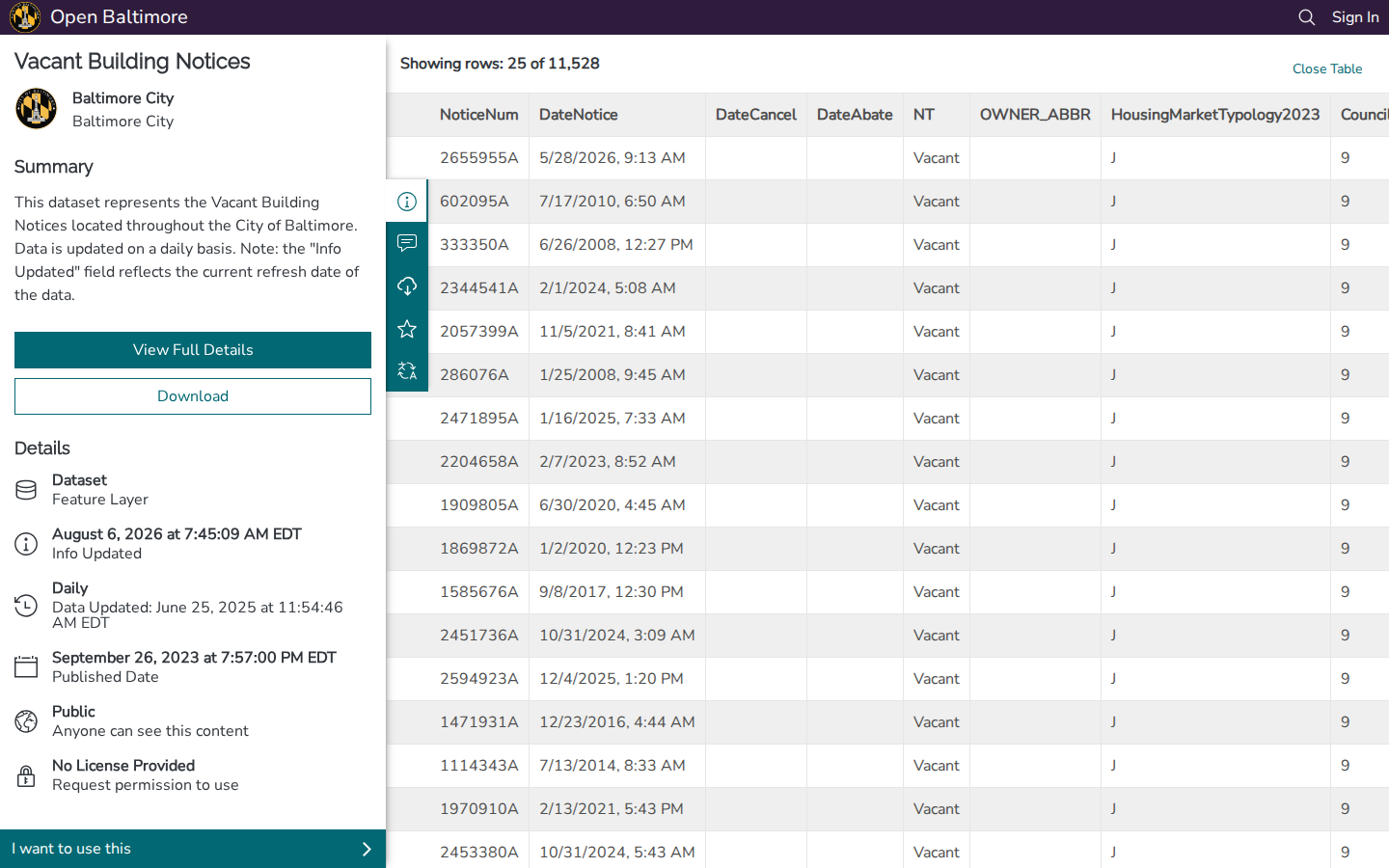
Filter to active notices and sort by newest
Use the Filter panel to keep rows where the DateCancel column is empty — a blank cancel date means the notice is still active. Then sort the DateNotice column descending so the newest notices are on top.
Download the list
Click the Download option on the dataset page and choose CSV. You can open the file in Excel or Google Sheets and re-apply the same filter and sort there.
Record the data
For each property capture the notice number (NoticeNum), notice type (NT), property address, block and lot (the city's parcel ID), owner name (OWNER_ABBR), notice date, and the cancel date if one appears. Active notices with long-standing dates are your strongest vacant-property leads.
What property data does Baltimore City publish?
| Environmental Citations | data.baltimorecity.gov · ArcGIS · FREE |
| Open Property Notices | services1.arcgis.com · ArcGIS · FREE |
| Tax Lien Sale | data.baltimorecity.gov · ArcGIS · FREE |
| Tax Sale | data.baltimorecity.gov · ArcGIS · FREE |
| Vacant Buildings | data.baltimorecity.gov · ArcGIS · FREE |
Common questions
Live in CountyPull for Baltimore City right now
| List type | Records | New in 30 days |
|---|---|---|
| Tax Delinquent | 37,198 | 0 |
| Code Violation | 5,727 | 159 |
CountyPull pulls Baltimore City fresh every morning — cleaned, deduped, skip-trace ready. The free plan includes 100 rows every month.
Get 100 Free Leads →